Getting accurate scrap car prices UK information helps you understand your vehicle’s real worth before making any decisions. Most UK car owners receive between £150 and £500 depending on size, weight, and current metal rates. Complete scrapping process helps you maximize your payout by knowing exactly what to expect. The scrap car prices fluctuates daily based on steel and aluminium demand worldwide. Licensed ATF facilities provide transparent pricing when you need honest valuations. Real 2026 pricing benchmarks show what you’ll actually get, not imaginary figures some companies promise. Car valuation services now offer instant quotes online within 60 seconds. Understanding these prices stops you from accepting terrible offers that waste your vehicle’s true value.
What affects Scrap Car Prices in the UK
Understanding what determines your payout puts extra quid in your pocket when selling up. Multiple factors cover weight, metal types, parts people want, where you live, and today’s market rates. The metal market bounces around every single day based on what factories need worldwide. How old your motor is matters way less than what it’s actually made from. A 2008 BMW packs more valuable aluminium than a 2015 budget hatchback built from cheap steel. Licensed operators weigh your car and check the parts before they settle on final offers.
Vehicle weight increases value
Heavier motors bring better money because there’s simply more metal to recover and flog on. A 1,500 kg car grabs roughly £50 to £80 more than a 1,000 kg runabout at today’s going rates. Your average family motor sits between 1,100 kg and 1,400 kg empty. Clear out your personal stuff before collection to get proper weighing and honest payment.
Scrap metal prices change daily
Steel rates jump about based on building work demand, what gets exported, and factory activity worldwide. Right now in January 2026, mixed vehicle steel sits at £180 to £220 per tone. Prices dropped 8% from December 2025 to January 2026 because building sites slowed down. Summer normally brings £20 to £40 better rates when construction kicks off across Britain. Checking prices before you scrap helps you time it right for maximum returns.
Make, model and parts demand
Popular motors fetch stronger prices when their bits sell fast to garages and mechanics. Ford Fiesta and Vauxhall Astra parts fly out the door because millions still drive these on UK roads. German brands like Volkswagen and Audi grab premium resale value for engines and gearboxes. Rare vehicles with pricey replacement bits attract breakers willing to pay extra. How desirable your motor is affects the final offer beyond just metal weight alone.
Location impacts collection cost
Urban versus rural pricing swings your payout by £20 to £60 depending how far operators travel. Manchester and Birmingham collections cost less than remote Scottish Highlands runs. Free collection services factor petrol and time into what they’ll actually pay you. Bringing your motor straight to an ATF yard yourself sometimes bumps your payout £30 to £50 higher. London metal exchange prices stay competitive because multiple yards fight over business in tight areas.
Condition affects payout
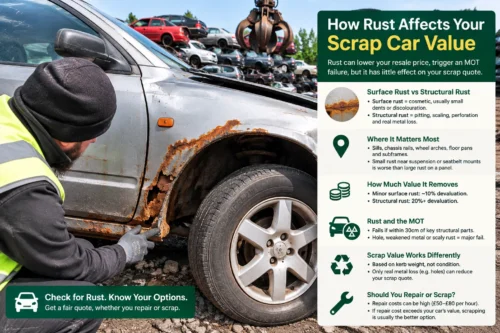
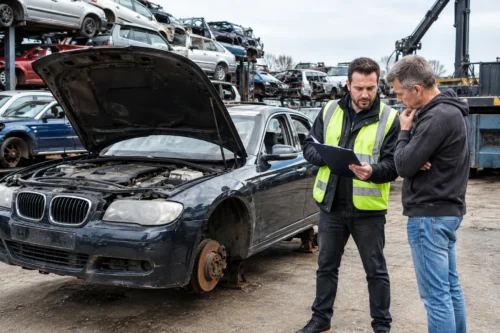
Drivable motors fetch £30 to £70 more than seized engines or missing wheels. Complete vehicles get stripped for parts before crushing, creating extra profit for operators. Motors missing bonnets, doors, or major bits receive lower offers because resale chances vanish. Burned motors or crash damage reduces metal quality and makes processing harder. Being straight about your car’s state prevents arguments when the recovery driver rocks up.
Value by vehicle type
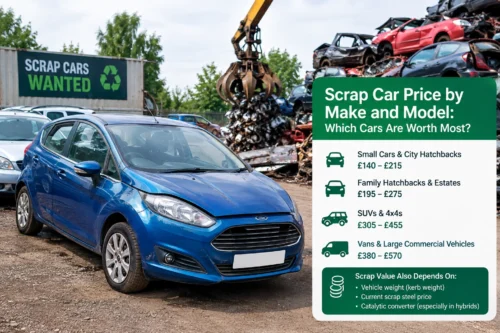
Prices swing wildly based on size, what they’re made from, and weight differences. Small hatchbacks like Fiat 500s or Toyota Aygo models bring £120 to £170 because they weigh 900 to 1,050 kg. Hatchbacks in the Focus or Golf category fetch £200 to £280 with weights around 1,250 to 1,400 kg. SUVs earn £320 to £480 thanks to heavier frames, bigger engines, and aluminium body panels. Vans command different rates at £350 to £520 due to commercial-grade steel and weights exceeding 1,600 kg.
Luxury vehicle pricing adds premiums for brands using expensive materials and components. Range Rovers contain significant aluminium that boosts values by £60 to £120 versus similar-sized budget SUVs. Electric cars present unique challenges because batteries require specialist removal before processing standard materials. Mercedes and BMW sedans fetch better prices than equivalent Skoda or Seat models.
How to calculate your value
Using an online calculator gives you rough numbers before requesting proper quotes from buyers. First, dig out your vehicle’s kerb weight from the owner’s manual or look it up online via the DVLA.
Times that weight by the current metal rate per tonne, usually £180 to £220 for standard steel motors. This gives you the base calculation that every valuation runs on.
Weight × price per tonne = base value is your starting calculation for any vehicle. A 1,300 kg Volkswagen Golf at £200 per tonne equals £260 base value. Add parts demand value of £40 to £80 for common models with strong resale markets. Subtract collection cost of £30 to £50 if you’re in remote areas requiring long pickup journeys. Your final calculation accounts for all three factors producing realistic expectations.
Price trends UK 2024 to 2026
Trends show dropping values from peak 2024 rates when steel demand hit post-pandemic highs. Payouts tumbled from £280 in June 2024 down to £220 by January 2026 for your standard family saloon. The recycling industry faced fewer export opportunities after new environmental regulations blocked shipments. Market analysis points to stabilization around current levels through summer 2026 based on construction forecasts. Metal prices historically climb during warm months when building projects accelerate across Britain.
Looking at three years of data reveals 2023 offered the weakest returns at £160 to £190 for typical vehicles. Prices peaked in spring 2024 then steadily slid throughout the year. The UK recycling industry processed 1.8 million end of life vehicles in 2025, up 4% from 2024 figures. Economic uncertainty and reduced manufacturing activity pushed values downward through late 2025.
Can you get more money than standard rates?
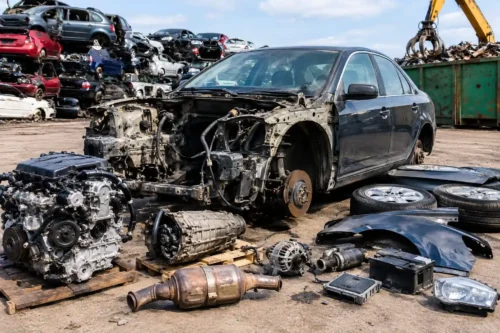
You can increase value by flogging valuable parts privately before scrapping the leftover shell for metal. Best strategies include whipping off catalytic converters, alloy wheels, and working electronics yourself. The resale market pays top dollar for genuine manufacturer parts that repair shops desperately need. Part-out sales can generate £200 to £600 beyond basic metal rates. Flogging a working engine alone brings £150 to £400 depending on mileage and condition.
Leather seats, sat nav systems, and performance exhausts shift quickly on eBay or Facebook Marketplace these days. Original equipment parts beat aftermarket alternatives for quality conscious buyers. These techniques need mechanical knowledge and time to dismantle components safely. Your leftover shell still fetches £100 to £180 at licensed facilities after removing profitable parts.
Scrap vs selling value comparison
The sell or scrap decision hangs on your vehicle’s age, condition, and remaining roadworthiness. Calculations show working cars under 15 years old almost always bring more money through private sales. Check Auto Trader listings for similar models to gauge realistic selling prices before choosing scrapping. A 2012 Ford Focus might fetch £1,200 to £1,800 privately but only £220 to £280 as scrap metal.
The equation changes when repair costs exceed the vehicle’s potential sale price. Failed MOTs requiring £800 in suspension work make scrapping more sensible than fixing then selling. Analysis includes advertising time, buyer negotiations, and paperwork hassles versus instant scrap payments. Don’t forget to claim your vehicle tax refund after scrapping.
How to get the best price in the UK
Getting top dollar requires comparing multiple quotes from licensed operators in your region. Maximize value by ringing at least three different yards and requesting detailed written offers. Timing matters because scrapping during peak periods in summer adds £20 to £40 extra. The ATF network across Britain includes over 1,800 licensed facilities with varying payment structures. Delivering vehicles yourself avoids collection deductions.
Compare quotes by phone or online within the same day because rates change quickly. Choose local ATF facilities within your area to minimize transportation costs affecting your final payout. Monitor industry news and wait for rate increases when possible. Best deals come from operators who weigh accurately and pay immediately.
Free collection and its impact on price
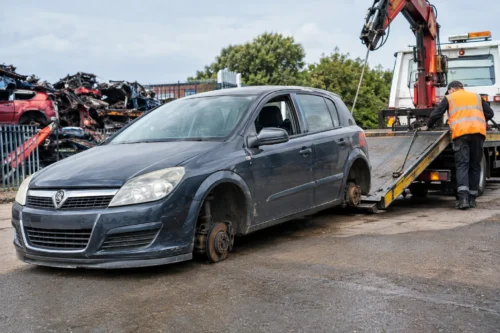
Free collection services deduct £30 to £60 from your payout to cover fuel, labour, and transportation time. Pickup costs get factored into purchase offers rather than charged separately as a visible fee. Licensed ATF operators scrap car prices calculated distance, fuel prices, and driver wages when determining collection inclusive quotes. Rural Scottish locations see larger deductions than urban Manchester or Leeds collections.
Free collection sounds appealing but delivering yourself increases payouts by £30 to £50 in most cases. Pickup calculations include recovery truck running costs around £1.20 per mile currently. ATF facilities prefer local collections within 15 miles to maintain profitable margins. Urban areas benefit from competitive collection rates because multiple yards service tight geographic zones. making Manchester car scrapping a cost effective option for many vehicle owners.
Instant Quote How it Works
Instant quote systems use your registration number, postcode, and vehicle condition details for rapid valuations. Online tools access DVLA database to retrieve make, model, year, and engine size automatically. Calculators use current per tonne rates and manufacturer weight specifications. Digital technology compares your location against collection costs and local yard rates. Most platforms provide figures within 45 to 90 seconds after entering information.
Accuracy depends on honest condition descriptions you provide about running status and completeness. Tools cannot account for missing parts or accident damage without physical inspection. Estimates give realistic ranges rather than guaranteed final payments. Converting browsers into customers by removing uncertainty and waiting periods happens through these instant systems. Booking collection directly through these tools secures your quoted price for 7 to 14 days typically.
FAQs
How much do you get for scrapping a car in the UK?
You’ll get between £150 and £400 for scrapping a standard car in 2026. Small hatchbacks bring £120 to £180 while larger SUVs fetch £320 to £480. Your exact payout depends on weight, metal prices that day, and whether parts can be resold.
Do I need a logbook V5C to scrap my car?
Yes, you need your logbook V5C to scrap legally at licensed ATF facilities. You’ll also need a photo ID like a driving license or passport. The scrap yard sends the V5C to DVLA to remove the vehicle from your name.
Can I scrap a car that doesn’t run?
Absolutely, you can scrap non-running cars but expect £30 to £70 less than running vehicles. Most yards offer free collection for broken down payments anywhere in the UK. They don’t need the engine working because they’re after the metal weight primarily.
Is scrap metal price higher in summer or winter?
Summer brings higher prices, typically £20 to £40 more per car than the winter months. Construction projects peak during warm weather, pushing up steel demand across Britain. June through August usually offers the best rates for scrapping your car.
How long does payment take after scrapping my car?
Most legitimate yards pay the same day or within 24 hours of collecting your vehicle. Bank transfers are standard and hit your account faster than cheques. You should get your Certificate of Destruction within 48 hours confirming legal disposal.
Contact Scrap My Car Services UK
Our valuation service uses real time metal rates and accurate vehicle data for precise offers. Collections happen within 24 to 48 hours after accepting your quote. Choosing experienced operators protects you from unlicensed dealers who create DVLA and environmental problems. Get an instant quote now using our online tool and receive payment the same day we collect. Read our customer reviews to see why drivers across the UK trust our service. including those comparing scrap car prices in London.