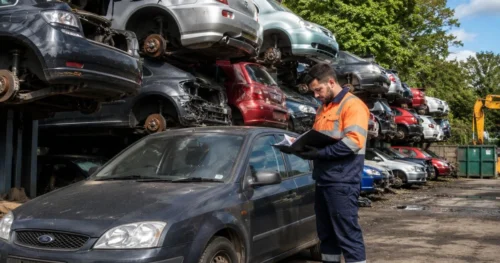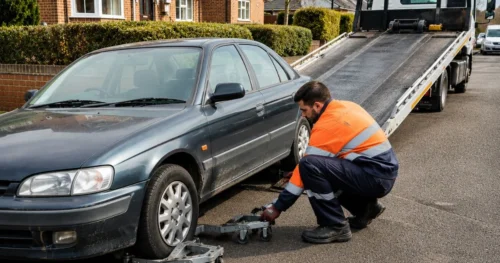
Why scrap car prices fluctuate in the UK comes down to metal markets, demand cycles, and economic factors changing every day. Scrap my car services UK adjusts prices using live London Metal Exchange data updated throughout each trading day. UK scrap yards respond to global supply and demand shifts that happen across international commodity markets. Scrap car price changes in the UK reflect metal price fluctuation patterns seen in construction, manufacturing, and export industries. Vehicle recycling prices move up and down based on steel values.
Steel prices change daily through international trading. This affects what yards pay for complete vehicles. Global demand shifts recycling rates when countries like China increase or reduce infrastructure spending. Exchange rates impact exports. This makes UK scrap more or less attractive to overseas buyers. Seasonal demand affects pricing when construction activity peaks in summer and drops during winter months.
How Steel Market Changes Affect Scrap Car Prices
Steel market impact on scrap prices UK determines roughly 70% of your total vehicle value at collection. The UK demand comes from construction sector projects, shipbuilding, and manufacturing plant requirements nationwide. London Metal Exchange publishes benchmark prices that licensed treatment facilities use for daily rate calculations. Steel price fluctuation in the UK happens when building activity increases or decreases across major economies globally. Scrap steel demand rises during infrastructure booms and falls when governments reduce capital spending programs.
Ferrous metal rates track commercial steel pricing. Recycled automotive steel gets graded as medium quality material. How steel prices affect scrap cars becomes obvious when comparing quotes separated by just two weeks. The steel market in the UK follows global commodity patterns rather than purely domestic consumption levels. Steel at £250 per tonne generates higher scrap payouts across all vehicle classes. Steel at £180 per tonne reduces quotes by 20% to 30% for identical cars collected later.
How Global Demand Influences Scrap Car Prices
Global demand for scrap prices UK creates international competition for British recycled metals sold overseas. China steel demand drives worldwide pricing. Chinese mills consume 50% of global steel production annually. EU recycling market activity affects UK rates when European treatment facilities compete for scrap supplies. Global scrap demand pushes UK prices upward when Asian economies expand infrastructure and manufacturing capacity.
Export scrap prices rise when weak pound sterling makes British metal cheaper for foreign buyers. International metal market fluctuations are transmitted to UK yards within 24 to 48 hours of major price movements. China increases steel demand causing UK scrap rates to jump £15 to £25 per tonne. Economic slowdown reduces demand. This drops prices back down as manufacturing output contracts globally. Global demand impact on scrap prices explains why UK rates move with Asian market cycles and trends. International scrap value UK benefits from export terminals in Liverpool, Southampton, and Felixstowe shipping containers abroad. High export demand raises UK scrap rates when overseas buyers pay premiums for quality automotive steel.
How Exchange Rates Impact Scrap Car Prices in the UK
Exchange rate scrap prices in the UK fluctuate based on GBP strength against USD and Euro currencies daily. International trade markets price commodities in US dollars. This makes currency conversion critical for UK exporters. Currency impact scrap prices become significant when sterling drops 5% to 10% against major currencies. Pound value scrap exports improve when GBP weakens. This makes British metal cheaper for foreign buyers to purchase.
Forex scrap value calculations determine whether exporting generates better returns than domestic processing for yards. How exchange rates affect scrap prices shows clear patterns when tracking GBP movements against trading partners. GBP scrap value UK rises for exporters when the pound falls below 1.20 against the dollar. Weak GBP increases export value by making UK scrap 10% to 15% cheaper in dollar terms. Strong GBP reduces competitiveness when British metal becomes expensive compared to European or Asian alternatives. The GBP drop increases scrap demand from abroad. This pushes domestic yard prices upward to compete. Scrap my car services UK adjusts quotes based on export conditions and current exchange rate trends.
How Seasonal Trends Affect Scrap Car Prices
Seasonal scrap car prices UK follow predictable annual cycles linked to UK construction industry activity levels. Recycling sector demand peaks between April and September when building projects operate at full capacity. Seasonal scrap trends UK show winter months bringing 10% to 20% lower prices than summer peaks. Metal demand cycles repeat annually with spring construction starting to drive steel consumption upward each year.
Recycling demand drops during December and January. Holiday periods reduce industrial activity across Britain. Why scrap prices change seasonally relates to construction requiring less steel when weather stops outdoor projects. Scrap value winter vs summer differences average £20 to £40 per tonne for standard vehicles. Winter slows construction activity. This causes lower steel demand and reduced scrap yard quotes. Spring and summer increase demand as infrastructure projects ramp up nationwide. This pushes prices higher. Holiday periods reduce industrial activity when factories close for Christmas and New Year breaks. January prices typically run 15% lower than July prices based on five-year historical averages. Seasonal cycles repeat annually. This makes price trends predictable for customers timing their vehicle sales strategically.
How Scrap Supply Affects Price Changes
Scrap supply and demand in the UK creates price movements when vehicle availability shifts across different periods. UK scrap yards face higher supply during ULEZ expansion. Owners scrap non-compliant vehicles at the same time. Recycling facilities process more cars after scrappage scheme announcements. This floods the market temporarily. Scrap supply levels increase during economic downturns when people dispose of older vehicles faster.
Recycling volume UK surges affect prices by creating temporary oversupply in regional markets. Scrap availability determines whether yards compete aggressively or reduce offers when inventory levels climb. How supply affects scrap price shows an inverse relationship. More vehicles means lower rates paid. High supply lowers prices when yards hold excess inventory awaiting processing and shipment. Low supply increases prices as facilities compete for limited vehicles to maintain operation volumes. More scrapped cars leads to lower rates when treatment capacity gets overwhelmed regionally. Fewer vehicles creates higher competition among yards. This pushes prices upward to secure inventory.
How Local UK Factors Change Scrap Car Prices
Local scrap price changes in the UK happen because UK regions show different industrial demand and competition levels. Transport networks affect pricing when collection costs vary between urban and rural postcode areas. Regional scrap prices in the UK differ by £30 to £80 depending on yard density and proximity to processing plants. .. If you’re planning to scrap a car in Witney, local competition between licensed ATF operators and collection distances can influence the quote you receive., local competition between licensed ATF operators and collection distances can influence the quote you receive. Local demand for scrap fluctuates based on nearby steel mills, export terminals, and manufacturing facilities.
Postcode scrap rates change within the same county based on collection distance and fuel expenses. Scrap price near me UK searches reveal these geographical differences clearly across treatment facility locations. Local scrap fluctuations occur when new yards open increasing competition or existing facilities close reducing options. Urban areas offer higher rates. Multiple competing yards fight for customer volume aggressively. Rural areas include transport deductions ranging from £40 to £100 for remote collection journeys. Competition increases local prices when three or more licensed facilities operate within 10 miles. London prices run £30 to £50 higher than rural Scotland for identical vehicles and conditions.
How Scrap Yards Adjust Quotes in Real Time
Scrap yard pricing adjustments in the UK happen continuously. Authorised Treatment Facility operators monitor market data feeds. Scrap my car services UK tracks metal prices through automated systems connected to commodity exchanges. Scrap pricing updates occur multiple times daily when significant market movements trigger rate changes. Real time scrap quotes reflect current conditions rather than yesterday’s pricing from outdated systems.
They adjust per-tonne rates when steel moves £10 or more from previous quote levels. They update customer quotes immediately when significant market events occur during business hours. The morning quote shows £400 based on overnight metal prices from Asian markets. Evening quote drops to £360 after London Metal Exchange reports 8% steel price decline. Scrap my car services UK uses automated systems to reflect changes within minutes of market movements. All pricing adjustments occur within environmental compliance frameworks required for licensed ATF operations.
How to Avoid Losing Money from Price Fluctuations
Avoid scrap price drops in the UK by understanding market cycles. Act during high price periods. Scrap my car Bedford services UK recommends monitoring steel prices for two weeks before selling vehicles. UK buyers offer better rates during summer construction peaks and strong export demand periods. Protect scrap value through strategic timing. Don’t accept first quotes received without comparison.
The best time to sell cars in the UK typically falls between May and August when construction demand peaks annually. Scrap price strategy involves getting multiple quotes on the same day to identify best current rates. When to sell scrap car UK depends on tracking metal market trends through news and commodity reports. Avoid low scrap prices by refusing quotes during known low demand periods like December and January. Sell during high metal prices when steel trades above £230 per tonne on exchanges. Compare multiple quotes from at least three different licensed facilities within 24 hours.
How Much Do Scrap Car Prices Fluctuate in the UK
Scrap price fluctuation in the UK ranges between 10% and 30% annually based on UK scrap market conditions. Metal exchanges report steel price swings of £70 per tonne between winter lows and summer peaks. Scrap price variation UK follows commodity volatility seen across all traded industrial materials globally. Metal volatility increases during economic uncertainty. Demand forecasts become unpredictable for manufacturers.
Recycling price range spans £180 to £250 per tonne for steel throughout typical calendar years. How much scrap prices change in the UK depends on global events like trade disputes or infrastructure spending announcements. Scrap value fluctuation range shows smaller weekly movements of 3% to 8% compared to annual swings. Steel price range sits at £180 to £250 per tonne across 12 month periods historically. Short term fluctuations occur weekly based on market changes reported through commodity trading platforms.
FAQs
Why did my scrap price change overnight?
Metal prices fluctuate through international commodity trading on the London Metal Exchange overnight. Global steel demand, currency exchange rates, and manufacturer orders shift constantly, affecting what UK yards offer by morning.
Do scrap prices go up and down daily?
Yes, scrap prices change daily based on global steel and copper trading activity. UK yards adjust quotes following London Metal Exchange benchmarks, manufacturer demand levels, and shipping cost variations affecting profit margins continuously.
What month has the highest scrap prices?
The summer months show the highest scrap prices when construction activity peaks across Britain annually. May through August bring strong demand as developers order steel for building projects, pushing per tonne rates up by £20 to £40.
Can I lock in a scrap price?
Some buyers offer short term price guarantees valid for 24 to 48 hours after initial quotes. This protects you from overnight market drops but expires quickly, so book collection fast before guaranteed rates disappear completely.
Who controls scrap prices?
Global metal markets control scrap prices through London Metal Exchange commodity trading and international steel demand. No single company sets rates because worldwide supply, demand, and manufacturing orders determine what UK facilities pay daily.
Get Your Instant Quote Today
Scrap my car services UK focus on whether waiting improves value or not . This depends on market direction. Fluctuation help services explain that predicting exact price movements remains impossible even for experts. Car scrap queries include how often yards update rates. Most adjust weekly or after major events. Why scrap prices change relates to fundamental supply and demand economics across global metal industries. Scrap value questions UK ask whether vehicle condition affects fluctuation sensitivity. It does not significantly.