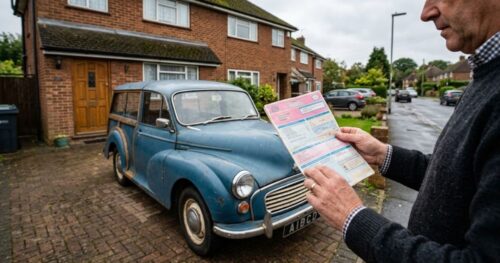
Most UK car owners confuse a VIN with a number plate. Both identify your vehicle but they work in completely different ways. A Vehicle Identification Number stamps permanently into the chassis at manufacture and never changes. A number plate is a legal record that can be transferred, retained, or cancelled.
Scrapping a car without understanding this difference costs you legally. The DVLA uses the VIN to close your vehicle record permanently through a Certificate of Destruction. Your number plate follows separate rules and missing the timing on a V317 form means losing a cherished plate forever. This guide covers exactly what each identifier does and why both matter at the point of scrapping.
What a Vehicle Identification Number Actually Is
A Vehicle Identification Number carries exactly 17 characters. Each character is either a letter or a number. The NHTSA standardised this format in 1981 under ISO 3779. Every vehicle built after that year follows the same code structure worldwide.
The VIN stamps permanently into the chassis at the point of manufacture. DVLA records every UK vehicle using this exact code on the V5C registration certificate. Letters I, O, and Q never appear in any VIN. They look too similar to the numerals 1 and 0 during manual data entry.
What a Number Plate Is and How It Works in the UK
How are the area code and year digits structured?
UK number plates use two letters to identify the registration area and two digits to identify the vehicle’s age. The first letter marks the broad geographic region. The second letter maps to a specific DVLA regional office. March registrations carry year digits matching the calendar year. September registrations add 50 to that number, so a September 2020 car displays 70 as its year identifier.
Why a Number Plate Can Be Transferred But a VIN Cannot
A number plate can be transferred between vehicles, but a VIN remains permanently attached to the vehicle that received it at manufacture. Owners transfer it using a V317 form or an online DVLA application, and a V778 retention certificate gets issued. A VIN stamps permanently into the chassis at manufacture and never moves. VIN cloning is a criminal offence under UK law and can render the car completely worthless.
VIN vs Number Plate
| VIN | Number Plate |
| Permanent identifier | Registration identifier |
| Stamped into chassis | Displayed on vehicle |
| Cannot be transferred | Can be transferred |
| Used for DVLA destruction records | Used for vehicle registration |
| Remains with vehicle for life | Can be retained or reassigned |
How the VIN and Number Plate Serve Different Purposes
The VIN as a Vehicle Record Versus the Number Plate as a Public Identifier
A VIN is a permanent internal record tied to the vehicle itself. It tracks recalls, insurance, warranty claims, HPI checks, and scrap notifications across the vehicle’s full life. A number plate is the publicly visible marker linking the car to its current registered keeper. Both sit on the DVLA vehicle register and neither replaces the other.
What Each One Reveals and What It Deliberately Hides
A VIN discloses manufacturer, engine type, assembly plant, and production sequence. Keeper identity never embeds in the VIN DVLA stores separately inside the V5C logbook. A free DVLA plate check reveals MOT date, road tax status, and first registration date. It never reveals outstanding finance, write off status, or stolen status only a VIN based HPI check uncovers those.
Scrap Car Documents required in the UK
- Match the VIN on the vehicle with the V5C.
- Retain any personalised registration before collection.
- Confirm the buyer is a licensed ATF.
- Keep proof of transfer.
- Wait for the Certificate of Destruction.
Where to Find the VIN on Your Car
The Four Physical Locations Manufacturers Stamp or Plate the VIN
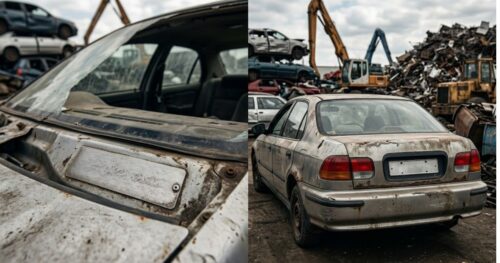
Manufacturers place the VIN in 4 separate locations on every car. The windscreen VIN plate sits at the base of the glass on the passenger side. The door jamb sticker on the B pillar carries it alongside tyre pressure data. The firewall inside the engine bay holds a direct stamp, and the boot floor panel beneath the spare wheel adds a fourth redundant location.
Where the VIN Appears on Your V5C Logbook and Other Documents
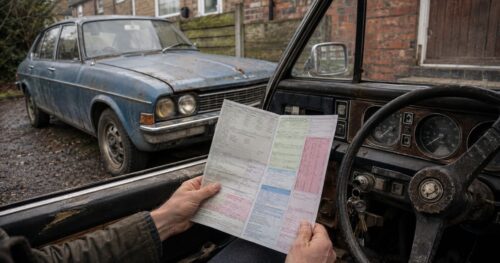
The V5C Registration Certificate carries the VIN in a field labelled VIN/Chassis/Frame No. Every MOT certificate records it too, and the full history is searchable at check mot gov uk from 2005 onward. Insurance certificates and service invoices also log the VIN to identify the exact build. A single character mismatch between the V5C and the physical stamp is a legal red flag to never complete any transaction when they differ.
What the Three Sections of a VIN Tell You
World Manufacturer Identifier and What the First Character Reveals
The first character of every VIN is a geographic region code under ISO 3779. UK manufactured vehicles carry S in position one. German vehicles carry W, covering brands like Audi and Volkswagen. Characters two and three then narrow the identity to the specific manufacturer brand and its vehicle division.
Vehicle Descriptor Section and the Check Digit at Position Nine
Characters 4 to 9 of a VIN identify key vehicle specifications and include a check digit that verifies the VIN is valid. Positions 4 to 8 encode body style, engine type, transmission, and restraint system configurations. Character 9 is the check digit calculated by weighting all 16 other characters and summing them using a modulo 11 formula. Any tampering with any character makes the check digit invalid and flags the VIN immediately.
Vehicle Identifier Section and How the Model Year Is Encoded
Characters 10 to 17 identify the model year, assembly plant, and unique production sequence of the vehicle. Position 10 carries the model year code, cycling through defined letters and numbers every 30 years. Position 11 identifies the assembly plant using a manufacturer assigned code. Characters 12 to 17 hold the production sequence number, the 6 digit serial that makes every VIN completely unique.
What Happens to the VIN and Number Plate When You Scrap a Car
Why the VIN Is the Identifier an ATF Uses When Notifying the DVLA
Every ATF submits the VIN as the primary identifier when notifying the DVLA. Registration numbers can be transferred or changed before scrapping the VIN never changes. The ATF sends the registration number, VIN, and disposal method electronically to DVLA. The vehicle record closes permanently and no new V5C can ever be issued for that VIN.
What Happens to Your Number Plate When a Car Is Scrapped
Personalised number plates must be retained before scrapping because the DVLA rejects retention requests once the vehicle has been destroyed. Standard registration numbers are cancelled and permanently withdrawn by the DVLA at scrapping. A cherished plate stays yours only after a V317 form is approved and a V778 retention certificate is issued. Post scrapping applications are rejected, the timing requirement is strict.
How the Certificate of Destruction Closes the VIN Record Permanently
A Certificate of Destruction is the only legal proof a vehicle was correctly scrapped in the UK. Only a licensed Authorised Treatment Facility can issue it, never a scrap metal merchant or private buyer. Once the ATF submits the VIN and destruction details, the DVLA vehicle record closes permanently. Without a CoD, the VIN stays live and remains usable for vehicle identity fraud.
Why VIN and Number Plate Matching Matters Before You Sell Your Scrap Car
What a Mismatch Between the VIN and V5C Signals to a Scrap Buyer
Check every physical VIN location against the V5C before any transaction. A VIN mismatch signals a replaced plate, a ringer, or a cut and shut construction. Licensed ATFs cannot legally issue a Certificate of Destruction when the physical VIN differs from the V5C Registration Certificate. Report any suspected theft immediately via gov uk report a vehicle stolen.
The Connection Between VIN Cloning and Illegal Scrap Transactions
VIN cloning starts when a legitimate car gets scrapped without a Certificate of Destruction. The VIN identity stays live in the DVLA database and criminals transfer it onto a stolen vehicle of the same make and colour. A forged V5C completes the disguise. Unlicensed collectors who skip the V5C cross check are the direct enablers of this criminal sequence.
FAQs
Is a VIN the Same as a Chassis Number?
Yes, VIN and chassis number are the same 17 character code stamped into the chassis at manufacture. The term chassis number predates the standardised VIN format from 1981. The engine number is separate and changes if the engine gets replaced.
Can I Scrap My Car If I Do Not Know the VIN?
Yes, the ATF locates the VIN from the vehicle itself during collection. A licensed Authorised Treatment Facility finds it without the keeper knowing it. Bring photo ID if the V5C logbook is unavailable.
What Happens to the VIN When a Car Is Scrapped?
The VIN is permanently retired from the DVLA register once the ATF submits the scrapping notification. The DVLA closes the vehicle record and issues a Certificate of Destruction. That VIN can never register another road legal vehicle.
Can Two Cars Have the Same VIN?
No, ISO 3779 guarantees no two vehicles share a VIN within a 30 year production window. The model year code at character 10 cycles every 30 years. The WMI, VDS, and VIS combination stays globally unique.
Do I Need My V5C to Get a Quote for Scrapping My Car?
No, only the registration number is needed for an instant scrap quote. The V5C logbook helps at collection but is not always legally required. A licensed ATF proceeds with photo ID and a physical VIN check.
Ready to Scrap Your Car the Right Way?
Whether you have your VIN, number plate, V5C logbook, or just the registration number, Scrap My Car Services makes the process simple and fully DVLA compliant. Get a fast quote, free vehicle collection, and peace of mind knowing your car will be handled by a licensed Authorised Treatment Facility with all paperwork completed correctly. Contact our team today and arrange your vehicle collection in minutes.