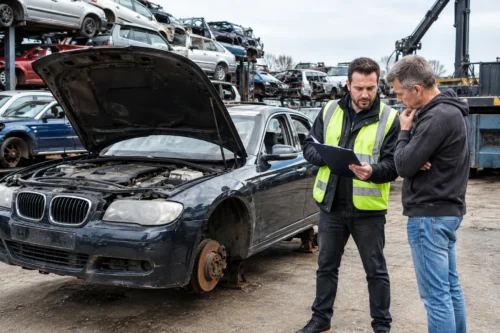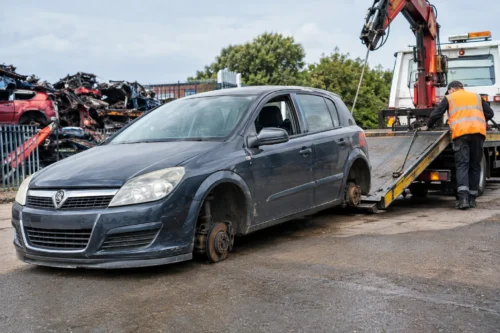
Yes, scrapping an end of life vehicle at an unlicensed yard breaks UK law completely. Every vehicle owner is legally required to send any old, damaged, or non running vehicle through an authorised treatment facility. Handing your scrap car to a private trader or unregulated yard skips the official process entirely. That decision leaves you criminally liable and exposed to serious fines and penalties as the registered keeper.
The DVLA does not wipe your legal responsibility just because you handed the keys over. Without going through a government licensed ATF, your legal obligations stay wide open. Illegal scrapping also causes real environmental harm, as these yards dump fluids with no care. A proper scrappage service through a licensed scrapyard handles compliant disposal and closes your civil liability for good through the right legal steps.
Why the Wrong Scrapyard Can Cause Serious Problems
Picking the wrong scrapyard puts you at legal risk. Unlicensed operators skip proper depollution and leave you exposed to fines. Only a registered ATF follows the rules your car’s disposal actually requires.
Only Licensed ATFs Can Legally Scrap Your Car
The UK has around 1,500 ATFs licensed to process end of life vehicles. Every Authorised Treatment Facility holds a valid ATF permit issued under environmental and waste management laws. The Environment Agency, SEPA, NRW, and DAERA each oversee their regions. A private scrapyard with no site licence cannot legally dismantle or dispose of your vehicle under the ELV Regulations 2003.
What the End of Life Vehicles Regulations 2003 Require
The ELV Directive, now held as UK retained law post Brexit, sets strict vehicle processing standards. Every approved facility must follow a depollution process that removes hazardous materials before crushing. Proper storage facilities, safe drainage systems, and recycling and recovery targets of 95% recyclable material apply. These DEFRA standards push the UK toward a true circular economy through sustainable dismantling.
No CoD Means No Proof Your Car Is Gone
A Certificate of Destruction is the only legal document that confirms your vehicle was legally scrapped. The ATF issued document carries your vehicle registration number, VIN number, date of acceptance, ATF facility details, and a unique certificate reference number. Without it, your DVLA record stays open. Choosing a reliable service for car scrapping in Ealing ensures the correct paperwork is completed and your legal responsibility is properly closed. That means road tax liability, insurance liability, and even ANPR fines can still land on you as the registered keeper. An unlicensed site will never send a DVLA notification, leaving your keeper status active on the DVLA database.
What Can Actually Go Wrong If You Use the Wrong Yard
Most people hand over their car keys and never think twice. But using an unlicensed operator creates real legal responsibility that follows you long after the car is gone. The risks range from fines and penalties to becoming linked to a crime you knew nothing about.
Your Keeper Liability Does Not Disappear
The DVLA record stays open when no Certificate of Destruction arrives. As the registered keeper, the vehicle owner remains the responsible party for road tax, insurance obligations, and any fixed penalty notices issued after disposal. ANPR triggered fines, congestion charges, and parking fines all land on the last keeper. The Environmental Protection Act 1990 also creates criminal liability if illegal disposal practices are proven and the DVLA pursues you for ongoing liability.
Your Car Gets Resold, Exported, or Abandoned
Unlicensed dealers regularly flip scrap vs salvage vehicles for profit. A car sold as scrap gets repaired and put back on road illegally as a salvage vehicle or resold vehicle. The Fraud Act 2006 covers financial advantage through deception, and Action Fraud handles these reports. Some vehicles get illegally exported or fly tipping of the shell creates abandonment liability back to you. Parts harvested from your car enter the grey market without your knowledge or are resold without consent.
ANPR Catches You, Not the Scrapper
Automatic Number Plate Recognition cameras sit across police networks, Highways England routes, and speed cameras nationwide. Your vehicle is still registered on the DVLA database, which triggers automatic notices the moment those number plate reads happen. Penalty charge notices and FPNs arrive addressed to the last registered keeper, not the yard. Deregistration failure means road tax evasion and vehicle excise duty arrears build up silently. Use the DVLA enquiry service or vehicle enquiry service to check your keeper status stays clear after scrapping.
The Certificate of Destruction Is Your Proof and Protection
Scrapping a car without getting a CoD is like paying for something with no receipt. The document does not just confirm disposal it cuts your legal responsibility completely. Without it, the vehicle stays tied to your name on every database that matters.
What a CoD Is and Who Actually Issues It
A Certificate of Destruction is a legally required document issued only by a licensed ATF. No unlicensed CoD exists in private yards and back street sites cannot produce one. The ATF issued document covers passenger vehicles, light goods vehicles under 3.5 tonnes, and three wheeled vehicles. It carries your vehicle registration number, VIN number, date and time of acceptance, ATF facility details, and a unique certificate reference. The approved operator sends it electronically within seven days, confirming destruction and ownership has ceased.
How It Closes Your DVLA Record for Good
Once the DVLA notified signal arrives from the ATF, your DVLA record update processes automatically. The keeper record closed status removes you as registered keeper road tax ceased and insurance obligations ended from that date. Your V5C registration certificate yellow section, also called section 9, goes to the ATF at drop off. Check the DVLA enquiry service or DVLA online service to confirm keeper status is updated and the vehicle shows as officially off road. The electronic confirmation arrives as an instantaneous reference that is your legal transfer complete signal.
What to Do If Your CoD Never Arrives
Contact the ATF first and demand a CoD copy with your evidence of transaction. If they refuse, report to DVLA and use the vehicle enquiry service to check keeper status is still open. A vehicle still registered in your name after scrapping warrants a report to Trading Standards and the Environment Agency. Fraudulent activity by an unlicensed dealer falls under the Fraud Act 2006. File with Action Fraud and request a criminal report from police. Civil legal remedy and civil legal action remain open if Fixed Penalty Notices received prove the car was on road after scrapping.
What Are the UK Penalties for Illegal Car Scrapping?
Illegal car scrapping in the UK carries fines. A £1,000 fine hits owners who skip DVLA notification. Unlicensed scrap dealers face a £5,000 fine. Environmental enforcement follows illegal dismantling. Every end of life vehicle must go through an Authorised Treatment Facility (ATF).
Key Penalties at a Glance
Five separate violations create five separate penalties.
| Violation | Penalty or Consequence |
|---|---|
| Failing to notify DVLA | £1,000 fine |
| Operating without a scrap metal licence | Up to £5,000 fine |
| Using an unauthorised disposal route | Vehicle stays on DVLA’s active record |
| Dismantling without proper depollution | Environmental enforcement action |
| Missing a Certificate of Destruction | Ongoing tax and traffic offence exposure |
An Authorised Treatment Facility keeps car scrapping inside the law. A valid Certificate of Destruction proves the process finished correctly. Together, these two records protect against a £1,000 fine or a £5,000 fine. UK rules tie every step, from collection to depollution, back to this paperwork.
Understanding the Laws Behind It Simply
Three UK laws govern every scrap car transaction. Together they set who handles your vehicle, how payment works, and where your responsibility ends. Miss any one of them and the legal exposure lands squarely back on you as the registered keeper.
End of Life Vehicles Regulations 2003 Require ATF Use
The ELV Regulations make mandatory ATF use a legal requirement, not a suggestion. Every vehicle classified as hazardous waste under this framework needs the required depollution processes before crushing. Hazardous materials removal, proper storage guidelines, and recycling and recovery targets all fall under DEFRA standards. The Environment Agency inspected sites carrying an environmental permit proving ELV directive compliance. Operating outside a licensed site only framework makes unlicensed disposal illegal under UK environmental law no exceptions exist.
Scrap Metal Dealers Act 2013 Bans Cash Completely
Cash for scrap illegal is the simplest way to remember this law. The Scrap Metal Dealers Act 2013 requires every regulated payment to be a bank transfer only or a cheque payment nothing else. An illegal cash offer from any yard is a clear red flag and a criminal offence under Scrap Metal Dealers Act compliance rules. Local council fines hit the dealer, but seller participation in an unlicensed transaction creates its own dealer liability exposure. Always keep your payment evidence as a traceable payment trail.
When the Seller Carries Legal Responsibility
Knowingly handing to an unlicensed operator removes any mitigating factor from your defence. The Environmental Protection Act 1990 treats this as aiding an environmental offence, creating both civil liability and criminal liability. Ignorance is not a full defence the courts expect sellers to verify ATF credentials before handover as part of due diligence. Accepting cash payment also signals seller accountability failure under Fraud Act 2006 coverage. Your duty of care ends only when a legal transfer of responsibility is completed with a valid CoD and a close DVLA record confirmation.
How to Spot a Dodgy Scrapyard
Fake scrapyards do not advertise themselves as fake, that would be too easy. They use real looking names, slick websites, and confident phone manners to seem legitimate. Knowing the specific warning signs before you pick up the phone saves you from legal and financial trouble that takes months to untangle.
Common Warning Signs That Should Stop You
A suspicious operator almost always shows multiple red flags at once. No ATF licence number on their website, no paperwork offered upfront, and inability to explain CoD process these three together confirm an unlicensed scrapyard. Watch for pressure tactics like immediate decision pressure or an unusually high price that beats every competitor.
A social media presence only with no Companies House registration and an unverifiable business address screams unregistered dealer. Any reluctance to provide details like an environmental permit number or an authorisation number confirms they operate outside the law.
Why a Cash Offer Is Always the Wrong Sign
Cash for cars sounds tempting but signals trouble instantly. The Scrap Metal Dealers Act 2013 makes cash payment illegal for all scrap transactions bank transfer required or cheque required, nothing else.
A cash offer tells you the dealer is operating outside the law and runs an unlicensed payment practice. No transaction trail means no financial record, leaving your DVLA record open with no CoD and no cash ever issued. That financial exposure lands entirely on you.
Check the Environment Agency Register Before You Book
The Environment Agency public register lists every legitimate ATF in England. Scotland uses the SEPA register, Wales uses the NRW register, and Northern Ireland uses the DAERA register. Search the authorised treatment facilities public register using the dealer’s business name verification or their ATF licence number. Cross reference with Companies House to confirm waste carrier status and confirm environmental permit validity. This due diligence check takes under five minutes and fully covers the verification of ATF credentials before you hand over the car.
How to Scrap Your Car Legally Step by Step
Most people do not know what the legal scrapping process actually looks like. when they need to scrap a car legally in Woking or elsewhere in the UK. It takes six clear steps from first contact to confirmed disposal. Follow each one and your DVLA record closes cleanly with zero loose ends.
- Get an instant quote from a verified licensed ATF online or by phone
- Choose your ATF and confirm their authorisation number on the EA register
- Arrange free vehicle collection or drop off at their licensed site
- Transfer your V5C by completing section 9 and handing it to the collector
- Receive your Certificate of Destruction electronically within seven days
- Confirm DVLA update using the DVLA online service to check keeper status
Checklist Before You Scrap Your Car
Run through this before handing over your keys to any scrapyard.
- ATF licence verified on the Environment Agency public register
- No cash payment accepted, bank transfer only, or cheque payment
- Certificate of Destruction guaranteed in writing before collection
- DVLA is notified and confirmed after the ATF submits electronically
- V5C section 9 completed and handed to the approved operator
- No unlicensed dealer red flags, no pressure tactics, no cash offer
- Payment evidence is saved as proof of a traceable transaction
FAQs
Can I Get in Trouble for Using an Unlicensed Yard?
Yes, keeper liability stays active under the Environmental Protection Act 1990. Fines, ANPR charges, and environmental prosecution all target the registered keeper, not the unlicensed yard.
What If You Did Not Know the Yard Was Unlicensed?
Ignorance is not a full legal defence the courts still hold the registered keeper responsible. Take remedial action fast by filing with Action Fraud and demanding a CoD immediately.
Is It Legal to Scrap a Car at Home?
Home scrapping is illegal under the ELV Regulations 2003, with no exceptions for private land or garage dismantling. The remaining shell always requires an ATF for compliant disposal.
How Do I Check If a Scrapyard Is Licensed?
Search the Environment Agency public register using the yard’s ATF licence number before handing over your car. Scotland, Wales, and Northern Ireland use SEPA, NRW, and DAERA registers respectively.
Scrap Your Car Safely With a Verified ATF
Don’t risk fines, open DVLA records, or dodgy dealers. Scrap My Car Services collects your vehicle for free and pays by bank transfer. We issue your Certificate of Destruction, notify the DVLA, and ensure fully compliant disposal with zero risk of a DVLA penalty, guaranteed.