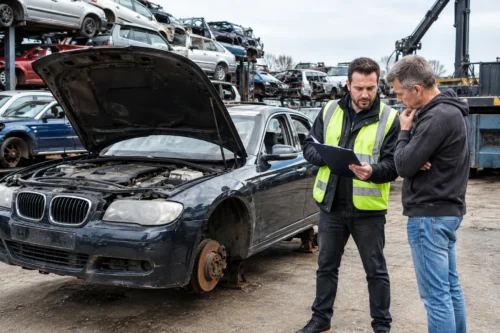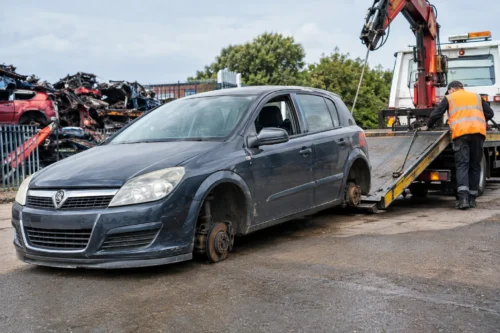
An old car sitting in your driveway is not just an eyesore. Rubber seals dry out and split within 12 to 18 months of no use. Once they crack, engine oil, coolant, and brake fluid drop straight into the ground below. Soil absorbs these fluids fast and they don’t stay put.
Contaminated soil carries those fluids toward groundwater in under 12 months, the Environment Agency confirms. An Authorised Treatment Facility (ATF) drains every hazardous fluid before the vehicle gets crushed. ATF operators follow the End of Life Vehicles Directive, a UK law that covers safe fluid removal and metal recovery. Scrap My Car Services uses only licensed ATF sites for every collection.
Why an Old Car Sitting Idle Is an Environmental Risk
What Fluids Inside a Stored Car Contaminate Soil and Groundwater
Every parked car holds 6 fluids, each one a separate ground contamination risk. Engine oil moves through soil fastest of all. 1 litre destroys 1 million litres of drinking water, the Environment Agency recorded in field studies. Ethylene glycol from coolant shuts down the microbes that keep soil healthy. Brake fluid has a hygroscopic structure it pulls water vapor straight from the surrounding air. Enough moisture turns brake fluid acidic. Acid fluid then eats through the rubber seals sitting under the car body. Battery acid and refrigerant both require a Hazardous Waste Consignment Note before any licensed carrier can legally move them.
How Long It Takes for a Deteriorating Car to Leak Hazardous Material
Rubber seals in a stored vehicle begin to dry out within 12 months of non use. Brake hoses and fuel hoses in outdoor stored cars face perforation risk within 18 to 24 months. UK freeze thaw cycles and persistent rain accelerate corrosion on steel tanks and copper brake lines. No competitor names this specific time line, it’s the strongest information gap in UK scrap car content.
What the End of Life Vehicle Regulations 2003 Require
What Qualifies as an End of Life Vehicle Under UK Law
Under Regulation 2 of the ELV Regulations 2003, an end of life vehicle is any M1 or N1 vehicle its owner surrenders for scrapping. M1 covers standard passenger cars. N1 covers light goods vehicles under 3.5 tonnes gross vehicle weight. Motor cycles and heavy goods vehicles fall outside this framework entirely.
Why Scrapping Outside an ATF Is Illegal and Environmentally Unprotected
An unlicensed dismantler has no legal duty to depollute your vehicle. Engine oil, brake fluid, and battery acid enter the uncontrolled waste stream with zero treatment. No Certificate of Destruction gets issued so the DVLA keeps the car registered to the previous keeper. Owner liability continues under the Environmental Protection Act 1990.
What Happens to a Car When It Is Scrapped at an ATF
The Depollution Stage and Why It Comes First
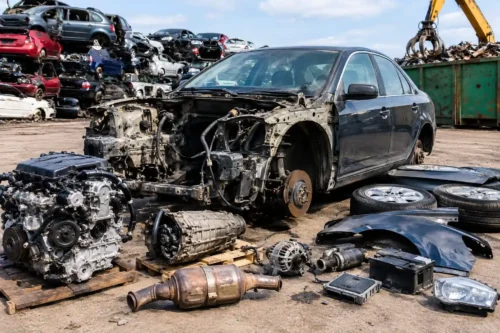
Depollution is the first stage at every authorised treatment facility. Schedule 1 of the ELV Regulations 2003 requires it before any dismantling begins. ATF technicians drain engine oil, coolant, brake fluid, battery acid, refrigerant and airbag propellant using vacuum extraction systems. Drained fluids go directly to a licensed hazardous waste contractor.
Parts Recovery Before Shredding
Engines, gearboxes, alternators, door panels, glass panels, batteries and tyres come out before the shell enters the shredder. ATF technicians inspect each component for resale into the UK second hand parts market. Recovered parts extend material lifespan and cut demand for new manufacturing. No competitor states what share of a vehicle enters this recovery stream first.
How the Vehicle Shell Is Processed After Dismantling
The vehicle shell enters an industrial shredder after de pollution and parts recovery. A magnetic separator pulls out ferrous steel. An eddy current separator recovers aluminium and copper from the non ferrous stream. Automotive shredder residue makes up roughly 20 to 25% of the shredded vehicle by weight and goes to energy recovery.
How Car Scrapping Reduces Steel Mining and Carbon Emissions
How Much Steel a Typical End of Life Vehicle Contains
A typical passenger car holds approximately 900 kilograms of steel. Steel accounts for 95% of all recoverable metals in the vehicle. The same car carries around 150kg of aluminium and 15 to 20kg of copper wiring. Each material has its own recovery route at the ATF facility.
How Recycled Steel Reduces Energy Use Compared
The electric arc furnace is really good at melting scrap steel. It uses a lot less energy than a blast furnace that smelts raw iron ore. In fact it uses seventy four percent energy. When we make steel from scratch it releases a lot of stuff into the air like one point eight to two tonnes of carbon dioxide for every tonne of steel we make. If we use recycled steel that number goes down to zero point four to zero point six tonnes of carbon dioxide, per tonne of steel. So if we take a car and recycle it we can save about one point four tonnes of carbon dioxide that would have been released if we had made new steel from scratch.
How Scrapping Prevents Landfill Contamination
Which Vehicle Components Become Landfill Waste Without Proper Recycling
Whole tyres have been banned from UK landfill since 2003. Lead acid batteries are classified as hazardous waste and cannot enter standard landfill streams. Catalytic converters contain platinum, palladium and rhodium, all recoverable platinum group metals. Plastic bumpers and windscreen laminate become automotive shredder residue without ATF processing.
How ATFs Divert Vehicle Materials From Landfill Under UK Waste Law
Schedule 3 of the ELV Regulations 2003 sets a minimum 85% reuse and recovery target by vehicle weight. The Environment Agency enforces this through each ATF’s environmental permit. Facilities that miss the target risk permit revocation. The UK waste hierarchy places landfill as the last option after reuse, recycling and energy recovery from automotive shredder residue.
What the Certificate of Destruction Confirms About Environmental Compliance
What the Certificate of Destruction Is and Who Issues It
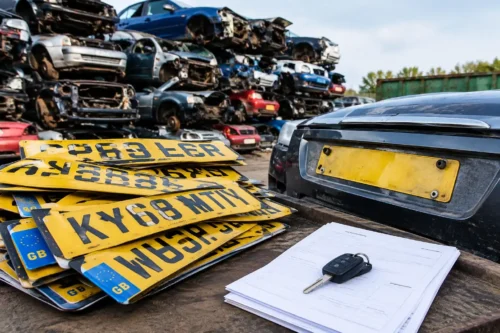
The Certificate of Destruction is a legal document issued exclusively by an authorised treatment facility. No private buyer or unlicensed dismantler can issue one. The ATF transmits it electronically to the DVLA within 7 days of receiving the vehicle. Every former owner receives a copy always free of charge.
What Happens if a Vehicle Is Scrapped Without a Certificate of Destruction
Without a Certificate of Destruction, the DVLA keeps the car registered as active under the previous keeper’s name. Road tax demands, parking penalties and legal notices can still arrive for a vehicle the seller no longer owns. No de pollution takes place at an unlicensed dismantler so engine oil, brake fluid and battery acid enter an uncontrolled waste stream. The DVLA vehicle enquiry service at gov uk lets any keeper confirm their vehicle’s registration status before and after scrapping.
How Scrapping Supports the UK Circular Economy
Which Vehicle Materials Re-Enter UK Manufacturing After Scrapping
Recycled steel from scrapped cars feeds into construction beams, railway track, and consumer goods like tins and pipes. Secondary aluminium goes to engine casting and aerospace components. Recovered copper re-enters wiring looms and electronic components across UK industry. Each material leaves the ATF as a secondary feedstock replacing the need for new mining.
How Electric Vehicle Battery Components Are Beginning to Be Recovered
A lithium-ion battery in a typical electric vehicle weighs between 300 and 600 kilograms. ATF technicians discharge it fully before removal, a specialist safety step. Hydrometallurgical processing then recovers lithium, cobalt and nickel through acid leaching. The UK Critical Minerals Strategy names all 3 as strategically important to domestic battery supply chains. Some batteries enter a second life window of up to 10 years in stationary energy storage before recycling begins.
FAQs
Is Scrapping a Car Better for the Environment Than Selling It?
Scrapping via an ATF guarantees regulated de pollution and material recovery. Selling privately extends vehicle life, which reduces manufacturing demand. Neither is universally better, it depends on the car’s fuel type, remaining mileage and emissions profile.
What Environmental Damage Does an Abandoned Car Cause?
An abandoned car leaks engine oil, coolant and brake fluid into surrounding soil. VOC evaporation from fuel tanks pollutes local air. Deteriorating shells also attract vermin and create uncontrolled hazardous waste on UK land.
Does Scrapping a Car Reduce Carbon Emissions?
Recycled steel from one scrapped car avoids roughly 1.4 tonnes of CO2. The ITF OECD research confirms net carbon savings but only when the replacement vehicle produces fewer emissions than the one scrapped.
How Do I Know if a Scrap Car Company Is Authorised to Protect the Environment?
Check the Environment Agency’s public register of permitted waste facilities by postcode. Cross reference against the DVLA’s ATF list on GOV UK. Any licensed facility issues a Certificate of Destruction free of charge within 7 days.