Missing parts change what a scrap car is worth in the UK. Scrap car value depends on two things: metal weight and part resale demand. When an engine, gearbox, or catalytic converter goes missing, both drop at once. This guide breaks down exactly how much each missing part costs you, what UK law says about your Certificate of Destruction, and how to get an accurate quote the first time.
What Determines a Car’s Scrap Value in the First Place
Vehicle weight and metal content
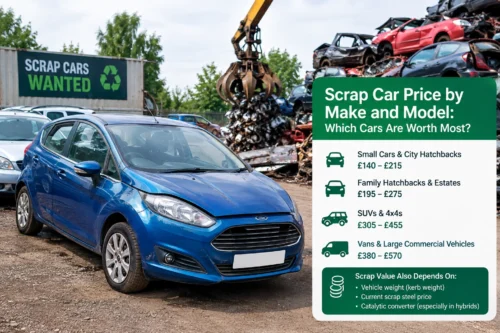
Kerb weight sets the weight based base value of a scrap car. Buyers pay for the scrap metal weight inside your car, mainly steel, aluminium, and copper. More ferrous metal content and non ferrous metal content means a higher offer. Prices follow the global scrap metal rate, tracked through a scrap metal index and paid per tonne scrap price. A heavier vehicle earns a higher value than a lighter one. This is why 4×4 scrap value and van scrap value usually beat hatchback scrap value and saloon scrap value.
Salvageable component resale value
Salvageable parts add extra money beyond metal weight alone. A working engine carries strong engine resale value, and a working gearbox carries solid gearbox resale value too. Small parts matter as well, including the alternator and starter motor. The breaker resale market and wider used parts market set prices based on part demand by make and model. This creates a resale premium above scrap rate for many components. A complete vehicle advantage exists because every spare parts buyer wants a car with more working components intact.
How Missing Parts Reduce Your Scrap Car Value
Engine and gearbox removal
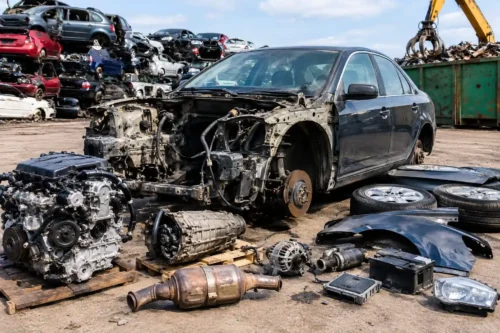
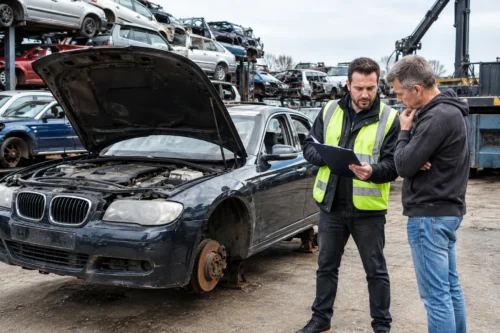
Engine removal causes the biggest single value hit on any scrap car. The engine is the heaviest recoverable component, so its engine weight contribution drives most of the price. Gearbox removal adds further metal content loss on top of that. Both sit inside the drivetrain component group, tied closely to the transmission. A cast iron engine block or an aluminium engine block removed from the car brings a 30 to 40 percent value loss.
Catalytic converter removal
A catalytic converter holds strong precious metal value from platinum, palladium, and rhodium. These platinum group metals give the part its PGM content. An aftermarket catalytic converter carries reduced PGM content compared to the original. Catalytic converter theft has climbed sharply, with a 170 percent theft rise 2013 to 2023 across the UK. This pushes the average converter scrap value 381 to 957 pounds per unit. As a key exhaust system component, it shows real hybrid vehicle vulnerability, and buyers check a converter serial number database to confirm authenticity.
Body panels, wheels and interior components
A missing body panel, whether it’s the bonnet, a door panel, or the boot lid, has only a minor weight contribution. The same applies to an alloy wheel, a steel wheel, or a tyre. Each interior component, including the dashboard and seat, adds little on its own. Small extras like an infotainment system, dash cam, or sat nav unit follow the same pattern. Even copper wiring inside the car carries a lower individual value impact than major parts like the engine or gearbox.
What Missing Parts Mean for Your Certificate of Destruction
What the ELV Regulations 2003 require an ATF to check
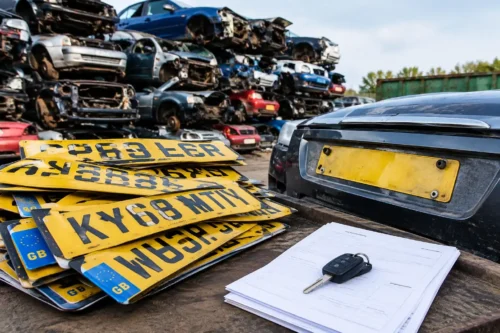
The ELV Regulations 2003, set out in SI 2003/2635, guide every legal scrap car process. Under Regulation 27 issue of certificate of destruction, an ATF must follow a strict depollution procedure first. This covers the Schedule 5 depollution operations, including hazardous fluid removal and engine oil removal. It also includes mercury switch removal, airbag removal, and battery removal from the vehicle. Before issuing the certificate, the facility runs a VIN legibility check and a chassis stamping check to confirm sufficient component presence.
When missing components delay your Certificate of Destruction
A missing VIN plate or missing chassis stamping can delay your paperwork. This triggers an additional verification procedure before the facility can move forward. Part of this includes a stolen vehicle check to confirm the car is legally yours. This step causes an identity verification delay, leading to extended CoD issuance. Instead of the usual timeline, expect a 5 to 10 working day delay. This protects the DVLA record accuracy requirement across every scrapped vehicle.
What missing parts do not block (only affect price, not eligibility)
Engine absence does not stop your certificate from being issued at all. The same applies to catalytic converter absence and body panel absence on the car. These missing parts create price impact only, nothing more serious than that. Your CoD eligibility stays unaffected by any of these three. The facility simply makes a depollution scope adjustment and runs a remaining fluid check. Each of these counts as a non identification component, unlike the VIN or chassis number.
CoD Timeline Difference Between Complete and Incomplete Vehicles
Standard 7 day CoD issuance for a complete vehicle
A complete vehicle gets its paperwork fast under UK rules. The gov uk scrapped and written off vehicles guidance confirms 7 day CoD issuance as the norm. This applies to a standard car, a light van, or a 3 wheeled motor vehicle. Each follows the same standard processing timeline from start to finish. The ATF handles this through ATF electronic submission straight to the system. This step triggers an immediate DVLA record update once the vehicle is confirmed scrapped. No extra checks are needed when every part and marking stays in place. The process moves smoothly from collection through to final certificate delivery within the week.
5 to 10 working day verification window when VIN or chassis ID is missing
A missing VIN plate or missing chassis stamping changes the timeline completely. This leads to a 5 to 10 working day delay instead of the usual week. The delay comes from an additional verification procedure the ATF must complete first. This includes a stolen vehicle prevention check to confirm legal ownership of the car. The result is an extended processing timeline compared to a complete vehicle. This step exists to meet the identity confirmation requirement DVLA sets for every scrapped car. Without a clear VIN or chassis number, the facility cannot skip this stage. The extra time protects both the seller and the wider vehicle recycling system.
Getting an Accurate Quote for a Car With Missing Parts
Disclosing missing parts before your quote is confirmed
Missing component disclosure matters before you accept any scrap car offer. Full condition description gives you real quote accuracy from the start. Skipping this step creates a real price adjustment risk later on. Many sellers face a collection day revision simply because details were left out. Scrap My Car Services builds every quote on transparent valuation from the first entry. This depends entirely on an honest vehicle description at the time of booking. Leaving out a missing engine or wheel changes what the driver finds on site. Accurate details from the start protect the price you were promised.
What to check before booking collection
Start with a simple wheel present check before your car gets collected. This confirms the mobility status of the vehicle ahead of pickup day. A car with no wheels may need the no wheels HIAB requirement instead. This differs from the usual tilt and slide truck limitation used for standard collections. Next, confirm your V5C logbook availability, since this supports fast proof of ownership. If the logbook is missing, valid ID and address proof can still work. Also check keys availability, as this affects how smoothly the collection runs. Getting these details right avoids delays once the recovery driver arrives at your address.
FAQs
Does a car without an engine still have scrap value?
Yes, a car without an engine still holds scrap value retained from its remaining metal. The remaining shell weight still carries real non ferrous metal value, though expect a reduced payout overall.
Can I scrap a car with no wheels?
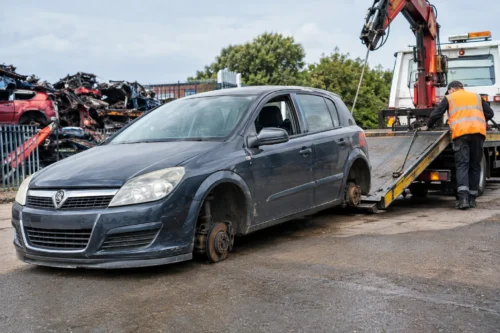
Yes, but no wheels means the usual tilt and slide truck limitation applies. Most facilities need specialist recovery equipment, like a HIAB crane lift or winch loading, to avoid collection refusal risk.
Is it better to sell parts separately or scrap the whole car?
Private part sale, such as turbocharger resale to a specialist part buyer, needs real mechanical skill requirements and fluid disposal responsibility. For most people, whole car convenience beats the effort versus return tradeoff.