Most UK drivers assume part exchange is always the safer financial choice. That assumption costs them money every year. The honest answer depends entirely on your car’s condition, age, and what a dealer is actually willing to offer. If your car runs well and has a valid MOT, part exchange almost always returns more. If it has failed its MOT, is a non runner, or carries expensive repair bills, scrapping through a licensed ATF wins every time.
This guide breaks down both options with real UK figures, real scenarios, and a clear decision framework. You will know exactly which route pays more before you make a single call.
Scrap or Part Exchange Based on Your Condition
Before anything else, here is the short version most people need.
| Car Condition | Best Option | Why |
| Runs, valid MOT, reasonable mileage | Part exchange | Dealer sees resale value |
| Failed MOT, repair cost under 50% of value | Part exchange after repair | Still worth fixing first |
| Non runner or major mechanical fault | Scrap | Dealer will not offer fair value |
| Repair cost exceeds car value | Scrap | No point investing more |
| Category S or N write off | Check both | Some dealers accept Cat N |
| Category A or B write off | Scrap only | Cannot return to road legally |
If three or more rows point to scrap, get a scrap valuation before visiting any dealership.If your car runs well and has a valid MOT, part exchange almost always returns more, while selling your car for salvage becomes the better option for non runners or high repair cases.
What Part Exchange Actually Means and How Dealers Price It
How a Dealer Works Out Your Offer
A dealer part exchange offer is not based on what your car is worth to you. It is based on what the dealer can make reselling it. They start with the trade in value. What similar cars achieve at auction, then subtract reconditioning, MOT costs, and their profit margin. CAP HPI and Glass’s Guide are the two data tools most UK dealers use.
The figure you see on AutoTrader is the retail price. Your part exchange value typically sits 10 to 20 percent below that. A car worth £4,000 privately might attract a part exchange offer of £3,200 to £3,600. Dealers absorb every resale risk and that cost comes straight off your quote.
What Kills Your Part Exchange Value Fast
An HPI check is part of every dealer’s process. Outstanding finance, write off history, or mileage discrepancy all reduce what they offer immediately. A clean V5C logbook, full service history, and valid MOT protect your part exchange value more than anything else.
Emission standards matter too. A diesel that fails ULEZ or Clean Air Zone requirements loses value fast. A car declared SORN signals an immediate problem to any dealer. Write off categories are critical. A Category N car with cosmetic damage may still attract a reasonable offer from some dealers. A Category S structural write off is a much harder sell and pushes most dealers toward a low offer or flat refusal.
What Scrap Value Means and How It Is Calculated
The Basics of Scrap Pricing in the UK
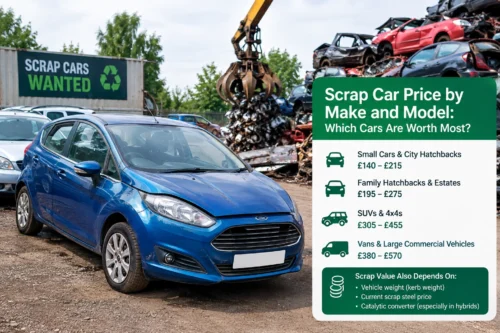
Scrap car value is calculated on three things: the car’s kerb weight, current scrap metal prices, and any reusable components the ATF can recover. Scrap dealers price per tonne. In 2025, scrap steel fetches around £140 to £180 per tonne. The average scrap car value in the UK sits between £150 and £400. A large SUV fetches more because it contains more recoverable metal.
A Smart car averages around £100, 45 percent below the UK average according to Scrap Car Comparison 2025 data. A mid size family hatchback typically lands between £180 and £300 depending on scrap metal market conditions at the time of the quote. The End of Life Vehicles Regulations 2003 require every scrap car to be handled by a licensed Authorised Treatment Facility. Only an ATF can issue a Certificate of Destruction. The document that officially closes your DVLA record and ends your keeper liability permanently.
Keep the Car Complete Before Scrapping
A complete car is worth more than a stripped one. Removing the catalytic converter, alloy wheels, or battery before your quote reduces what the ATF can recover and that reduction comes off your final payment. Under the Scrap Metal Dealers Act 2013, all scrap payments must go by bank transfer or cheque. Cash payments for scrap cars are illegal across England, Wales, and Scotland.
SORN status and missing MOT do not affect your ability to scrap. Non runners are collected free of charge by most licensed ATFs under their waste carrier licence.
How Much Each Option Pays in Real UK Scenarios
Scenario One: 10 Year Old Ford Focus (Valid MOT, 85,000 Miles)
- Part exchange: approximately £2,800 to £3,400.
- Scrap value: approximately £180 to £260.
Verdict: Part exchange wins by a significant margin. This car holds genuine used car market demand. Taking it to an ATF leaves over £2,500 on the table unnecessarily.
Scenario Two: 14 Year Old Vauxhall Astra (Failed MOT, Non Runner)
- Part exchange: £200 to £400 if a dealer accepts it at all, most will not.
- Scrap value: £180 to £280 with free collection included.
Verdict: Scrap wins on value and certainty. No dealer offers fair value on a non runner with a failed MOT. Scrapping gives a guaranteed bank transfer and a Certificate of Destruction the same day.
Scenario Three: 9 Year Old BMW 3 Series (Category N Write Off)
- Part exchange: £1,800 to £2,400 from a specialist dealer. Standard dealers will offer far less or decline.
- Scrap value: £220 to £380 based on weight.
Verdict: Check both before deciding.
A Category N write off carries cosmetic damage. However, some specialist dealers still buy these. Get a scrap quote first as your guaranteed floor price, then approach dealers. If no dealer beats it by at least £500, scrapping is the cleaner and faster option.
Hidden Costs Most People Forget
Part Exchange Costs You Negotiating Power
The highest hidden cost of part exchange is not money, it is leverage. Dealers bundle your old car’s value into the new car deal. This makes it easy to obscure Whether to scrap or sell your car, comparing quotes ensures you receive a fair price.. A dealer who offers £500 more on your part exchange may quietly add £500 to the price of the new car.
Always negotiate the new car price first. Agree on the figure before mentioning your part exchange. This separates both transactions and protects your position on each independently.
Repair Costs Before a Dealer Accepts Your Car
Some dealers require a recent MOT or basic repairs before accepting a part exchange. Fixing a car to make it part exchange ready can cost £150 to £500 depending on what needs attention, costs that come directly off the value difference between part exchange and scrapping.
Scrapping carries none of these costs. The ATF accepts the car in any condition. No repairs, no advertising, no viewings. Free collection means the entire process costs you nothing out of pocket and outstanding finance is the only scenario where scrapping carries a complication.
When Part Exchange Is the Better Choice
Car Is Under 10 Years Old With Service History
A car under 10 years old with a full service history, a valid MOT, and under 100,000 miles holds real resale value. Dealers compete for this stock. Use AutoTrader valuations and CAP HPI data to check your car’s realistic private sale value before visiting any dealership it gives you a solid benchmark against the part exchange offer.
You Are Buying a Replacement From the Same Dealer
Part exchange makes the most financial sense when you are simultaneously purchasing a replacement. Dealers are more motivated to offer a competitive trade in value when they are also making a sale. Timing your purchase around end of quarter periods can add £200 to £500 to your effective trade in value without changing the car’s condition at all.
When Scrapping Gets You the Better Deal
Failed MOT and Repairs That Do Not Add Up
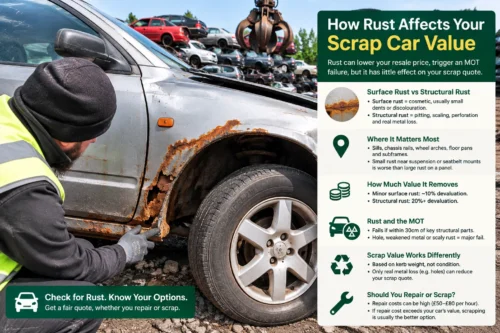
A failed MOT on an older car often marks the financial tipping point. If repair costs exceed 50 percent of the car’s current market value, the 50 percent rule says scrap it. A 15 year old hatchback worth £800 needing £600 of MOT repairs is a clear case. Rust on sills, worn suspension components, and emissions failures rarely arrive alone. Fixing one issue exposes another, and the total repair bill grows fast.
Write Off Categories That Close the Part Exchange Door
Category A and Category B: Write offs cannot legally return to UK roads. In both cases, scrapping through a licensed ATF under the End of Life Vehicles Regulations 2003 is the only legal route. Insurance write off confirmation from your insurer, combined with your V5C logbook, is all the documentation needed to arrange collection.
Category S: Cars with structural damage are rarely accepted by mainstream dealers at a fair price. Most offers fall at or below scrap value, making the ATF route both more reliable and more transparent.
Use a Scrap Quote for a Better Part Exchange Offer
Your Scrap Quote Is Your Guaranteed Floor Price
This is the angle most UK car owners never consider. A scrap quote from a licensed ATF is a fixed, guaranteed offer. It is the absolute minimum your car is worth, regardless of condition. Walking into a dealership with that figure in hand changes the negotiation entirely.
If a dealer offers less than your scrap quote on a part exchange, you have a concrete reason to walk away. Most dealers know scrap values well, presenting one shows you have done your research and are not guessing.
How to Use It at the Dealership
Get your instant scrap valuation before visiting any dealer. Show the figure when discussing your part exchange and frame it simply. This is what the car is guaranteed to make today. Can you beat it by enough to make part exchange worth the extra effort?
A difference of £300 to £500 above the scrap quote makes part exchange worth choosing for a car in reasonable condition. Below that margin, the free collection, instant bank transfer, and zero prep costs of scrapping make it the smarter and simpler option.
Legal Checks Before Choosing Either Option
Outstanding Finance Changes Everything
You cannot legally part exchange or scrap a car with outstanding finance without the finance company’s written permission. The finance company owns the vehicle until the debt is cleared. An HPI check reveals any outstanding finance quickly dealers run this before making any offer. If undisclosed finance appears, the deal collapses and legal liability follows.
DVLA Notification Is Required Either Way
Whether you part exchange or scrap, you must notify the DVLA of the change in registered keeper. For part exchange, the dealer handles the V5C transfer. For scrapping, the ATF submits the Certificate of Destruction and DVLA closes your record automatically. In both cases, keep your confirmation documents. For scrapping, retain the CoD. For part exchange, keep the V5C yellow slip as proof that the car left your ownership on the agreed date.
Scrap or Part Exchange in 30 Seconds
Part exchange wins if:
- Car runs and has a valid MOT
- Under 10 years old with service history
- You are buying a replacement from the same dealer
- Repair cost is under 30 percent of car’s market value
Scrapping wins if:
- Car is a non runner or has a failed MOT
- Repair cost exceeds 50 percent of the car’s value
- Car carries a Category A, B, or S write off
- No dealer offers more than £300 above your scrap quote
- Car has outstanding finance the dealer will not absorb
Check both first if:
- Car is a Category N write off
- Car is between 10 and 14 years old with mixed conditions
- You are unsure of the car’s real market value
Frequently Asked Questions
Is Part Exchange Always Better Than Scrapping?
No. Part exchange pays more only when the car has genuine resale value. On a non runner or a car with a failed MOT, dealer offers frequently sit at or below scrap value without the speed or legal certainty that scrapping provides.
Will a Dealer Take a Non Runner as Part Exchange?
Some will but offers on non running cars, typically sit at or below scrap value. Get a scrap quote first. If the dealer cannot beat it meaningfully, scrapping is the faster and fairer route.
Can I Scrap a Car That Is on Finance?
Not without written permission from the finance company. They legally own the vehicle until the debt is settled. Scrapping a financed vehicle without authorisation is illegal and carries serious legal consequences.
How Do I Get the Best Scrap Price in the UK
Get quotes from multiple licensed ATFs on the same day. Keep the car complete. Do not remove the catalytic converter, battery, or alloy wheels before the quote. Earlier in the month tends to produce stronger offers when yards carry lighter workloads.
Does Part Exchange Affect the Price of My New Car?
Yes, and this matters more than most people realise. Always agree on the new car price before revealing your part exchange. This prevents dealers from inflating one figure to absorb a discount on the other.
Get Your Instant Scrap Quote Before You Decide
If you need to scrap a car in Windsor, Know your floor price before you walk into any dealership. Get an instant scrap car quote with free collection from a fully licensed ATF today. Every collection includes a valid Certificate of Destruction, proper DVLA notification, and payment by bank transfer, fully compliant with the Scrap Metal Dealers Act 2013. Confirmed scrap car price upfront, no hidden reductions, no paperwork delays. Scrap My Car Services is the legal way to use the quote as negotiation leverage. Either way, you go in knowing exactly what your car is worth.